

Freight News
5 Common Supply Chain Mistakes To Avoid

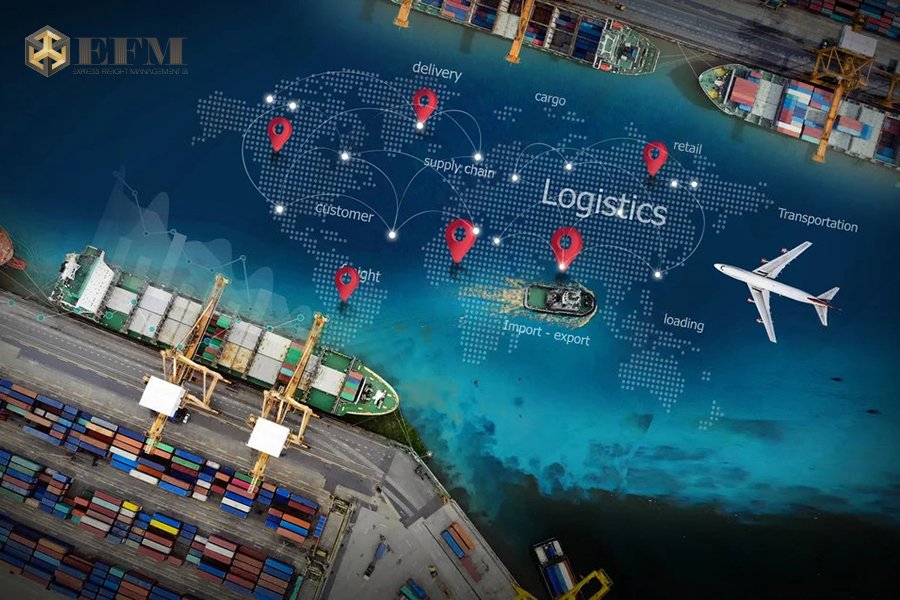
Manufacturing shifts into Southeast Asia are reshaping export routes and supplier networks. As such, global trade flows between the United States and ASEAN economies have grown more interconnected. However, many exporters operating through ASEAN routes report facing disruptions. These disruptions often stem from avoidable administrative errors. This article explains five common supply chain mistakes and how companies can correct them to maintain cost efficiency and compliance integrity.
Mistake 1: Misclassifying Harmonized System (HS) Codes

The first mistake revolves around Harmonized System (HS) Codes. HS codes determine the duty rate, compliance category, and country-of-origin treatment for exports. Misclassification increases one’s exposure to customs penalties and shipment holds. These penalties can range from 20% to 40% of shipment value for negligence. In cases deemed as fraud, penalties can be up to the full domestic value of the merchandise.
To avoid this, exporters should do their due diligence. Teams should match product composition, function, and materials to current tariff schedules before submitting any export documentation.
Mistake 2: Applying Incorrect Incoterms
Applying incompatible Incoterms can lead to confusion over who is liable for what. According to Maersk’s 2026 Incoterms Advisory, terms such as FOB or CIF apply specifically to bulk (bulk shipping) or non-containerized (breakbulk shipping) loads. During standard container shipping (FCL shipping, LCL shipping), the cargo is handed over at terminals. Therefore, using those Incoterms leaves exporters responsible for potential losses before vessel loading.
Further Reading: CIF Incoterms: Business Guide
Adopt FCA (Free Carrier), CPT (Carriage Paid To), or CIP (Carriage and Insurance Paid To) for container shipments. These terms transfer liability as soon as the cargo is delivered to the carrier at the designated terminal. For shippers, this aligns the transaction with the actual operational process.
Further Reading: FCA Incoterms: Business Guide
Mistake 3: Ignoring IMDG Code Regulatory Updates
Dangerous goods shipping is governed by a strict, regularly updated set of rules. In sea freight, this protocol is known as the International Maritime Dangerous Goods (IMDG) Code. The latest amendment (42-24) came into force on January 1, 2026. Shippers using the older Amendment (41-22) would therefore have faced automatic rejections at the destination port.
Further Reading: IMDG Code: 2026 Amendment
To avoid this, conduct a formal audit of all Material Safety Data Sheets (MSDS). This includes classification, labeling, and packaging criteria. Ensure all packaging follows the 42-24 documentation before booking export space.
Mistake 4: Not Planning for Disruptions
Overreliance on one supplier or production location increases exposure to unexpected regional disruptions. With rising geopolitical tensions, such disruptions are unfortunately becoming more common.
Geopolitical conflict, tariff changes, and energy price volatility have continued to affect global trade routes in 2026. At the same time, Marsh reports that 65% of companies are currently experiencing at least one supply chain bottleneck.
Diversification is therefore a practical requirement rather than a strategic option. Effective mitigation includes:
- Sourcing from multiple suppliers across different regions
- Establishing secondary production or procurement routes within ASEAN
- Maintaining contingency contracts for critical materials
These measures reduce dependency risk and allow faster recovery when disruptions occur.
Mistake 5: Failing to Calculate Total Landed Cost

Evaluating profitability based on freight rates alone leads to underreported cost exposure. These additional fees often include terminal handling charges, demurrage, destination costs, among others.
Further Reading: What Is Demurrage?
Businesses should conduct integrated landed cost analysis. This is often done through using a standardized framework that incorporates all origin, transit, and destination expenses. Key cost inclusions should cover:
- Freight and cargo insurance
- Tariffs, duties and customs clearance fees
- Bonded warehousing or last-mile drayage
- Further Reading: Bonded Warehouse vs. Free Trade Zone
Conclusion
The margin for error in supply chain management is shrinking. Errors in classification, contract terms, compliance, sourcing strategy, and cost calculation continue to create avoidable risk in global freight operations. Each issue compounds when combined, resulting in delayed shipments, financial penalties, and reduced margins.
Professional freight forwarders like Express Freight Management provides structured oversight in these areas. We oversee everything from customs pre-validation and HS code management to compliance with the IMDG 42-24 standard. This enables businesses to operate within full regulatory alignment while strengthening their logistics integrity across ASEAN lanes.
For nearly two decades, Express Freight Management has been the trusted partner for businesses shipping between the United States and Southeast Asia. We handle the technological complexity for you, managing everything from carrier selection and customs clearance to warehousing. Discover a streamlined approach to logistics with Express Freight Management for your shipping needs between the United States and Brunei, Cambodia, Indonesia, Laos, Malaysia, Myanmar, Philippines, Singapore, Thailand, and Vietnam today!