

Freight News
Benefits Of Air Freight


Following a record year (2024) where U.S. goods exports to ASEAN reached $123.5 billion, American businesses face increasing pressure to move inventory faster. Air freight serves a specific function for businesses that require performance metrics superior to the slow pace of sea transport. In this article, we discuss the benefits of air freight to help business owners make informed decisions about their shipping strategy.
Speed and Reliability
Speed
Air freight offers unmatched speed for your urgent Trans-Pacific shipments. For example, shipping to Singapore from Los Angeles by sea can take anywhere from 25 to 40 days. Air freight completes this same route in just 2 to 5 days.
Reliability
Airlines operate on fixed slots. If your cargo misses a flight, it moves on the next available aircraft within hours. This predictability allows you to promise specific delivery dates to your customers. You gain the power to meet tight deadlines without the stress of ocean delays.
Inventory Turnover and Cash Flow
Speed translates directly to efficiency. Inventory out at sea for six weeks is “dead capital”. It appears on your books as an asset, but it cannot be billed. For high-value exports like aerospace parts or medical devices, the cost of capital tied up in transit often exceeds the premium paid for air freight.
Air freight shortens this cycle significantly. You deliver the product, invoice the customer, and receive payment weeks earlier.
Enhanced Security and Reduced Risk
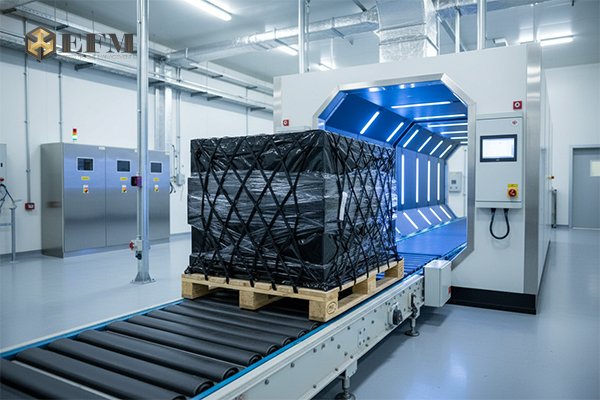
Enhanced Security
The Transportation Security Administration (TSA) enforces strict screening for all cargo departing the US. Access to airside facilities is tightly controlled. This drastically lowers the risk of theft.
Reduced Risk
Air cargo is handled with greater care. Firstly, it avoids the multiple handovers involved in sea freight. More importantly, major air freight hubs like Singapore utilizes automated systems, reducing physical touchpoints. For exporters shipping sensitive electronics or proprietary machinery to Southeast Asia, this “sealed pipe” environment drastically reduces shrinkage and tampering risks.
Lower Packaging and Warehousing Costs
Packaging
Packaging requirements differ between air and sea freight. Sea freight requires heavy, expensive crating to protect goods from moisture, salt, and stacking pressure during a month-long voyage. Meanwhile, air cargo flies in a controlled environment. This allows for lighter, standard packaging.
Warehousing
Additionally, the speed of air transport supports “Just-in-Time” delivery models. For US exporters, this rapid turnover reduces the need to hold large safety stocks in domestic or foreign warehousing, lowering your overhead costs.
Global Reach
Airplanes offer connectivity that ships cannot match. Cargo ships can only dock at coastal gateways. Inland delivery then requires long, slow trucking. For landlocked destinations like Laos, air freight is the only available option. This is why professional freight forwarders, like Express Freight Management, often tap on this network to speed up delivery, even to remote locations.
Air Freight vs Sea Freight
| Feature | Air Freight | Sea Freight |
| Transit Time | 3-5 Days (Reliable) | 35-50+ Days (Variable) |
| 2025 Impact | Minimal Delay | High Delay (Red Sea) |
| Cost Structure | Higher Base Rate | Lower Rate + Surcharges |
| Capital Efficiency | High (Fast turnover) | Low (Tied up capital) |
| Packaging | Lightweight/Standard | Heavy Crating |
| Security | High (TSA Screened) | Moderate (Handling Risks) |
When To Choose Air Freight
You should consider air freight when your business needs dictate velocity over volume:
- High Value Density
- The product is expensive but lightweight (e.g., semiconductors, medical devices).
- Project Deadlines
- You are shipping machinery required for a factory launch date that cannot move.
- Perishables
- The goods have a limited shelf life.
- Contractual Penalties
- The cost of late delivery exceeds the cost of freight.
- Emergency Parts
- A production line is down and needs a replacement component immediately.
Conclusion
Air freight delivers more than just rapid transport speed. It protects your inventory and unlocks vital working capital. Yet, navigating these fast-paced logistics route remains complex in today’s unpredictable global market. Fortunately, professionals like freight forwarders exist to help make sense of the numbers. Through years of experience, they can provide individualized guidance to cater to each shipment.
For nearly two decades, Express Freight Management has been the trusted partner for businesses shipping between the United States and Southeast Asia. We handle the technological complexity for you, managing everything from carrier selection and customs clearance to warehousing. Discover a streamlined approach to logistics with Express Freight Management for your shipping needs between the United States and Brunei, Cambodia, Indonesia, Laos, Malaysia, Myanmar, Philippines, Singapore, Thailand, and Vietnam today!