

Freight News
Bicycle and E-Bike HS Codes for US Imports

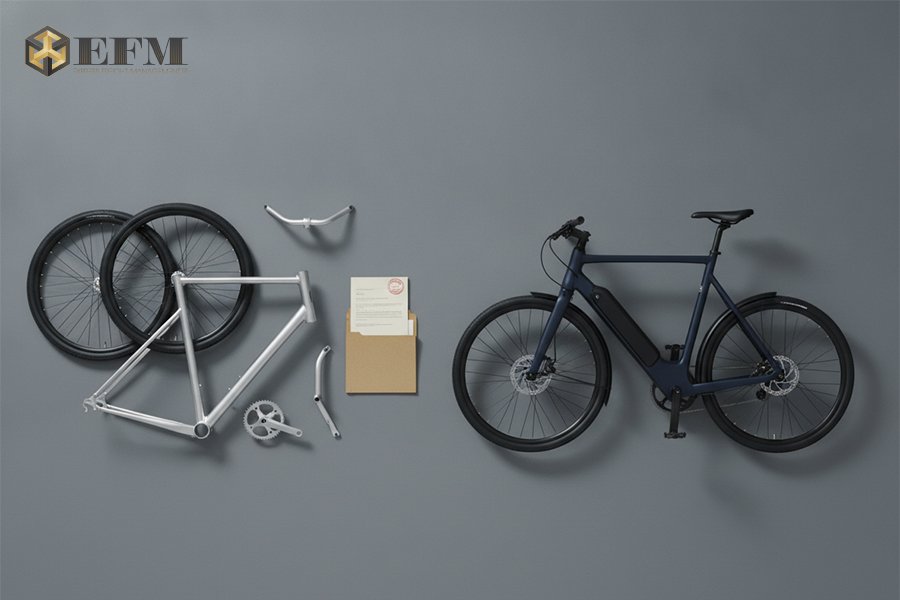
Recent adjustments in trade enforcement have established sharp differences in United States tariff rates based on the country of origin. Manufacturing centers have adjusted to these realities, leading many brands to transition their bicycle and electric bicycle assembly lines to facilities in Vietnam, Cambodia, and nearby regions.
When the tariff difference between origins runs to 37 percentage points or more, a misclassification can mean paying the wrong rate or facing penalties on audit. This guide covers the applicable Harmonized Tariff Schedule headings, how each category is determined, and the documentation required for seamless customs clearance.
How HS Codes Work for US Imports
The Harmonized System (HS) is the international framework that customs authorities use to identify traded goods. At the international level, it assigns 6-digit codes that are uniform across all member countries.
NOTE: Bicycles and similar vehicles typically fall under Chapter 87 of this system.

The United States extends that 6-digit base to a 10-digit number under the Harmonized Tariff Schedule of the United States (HTSUS). Those additional four digits are what differentiate product subcategories and ultimately determine the applicable duty rate for imports. Outbound shipments use a parallel ten-digit Schedule B system administered by the Census Bureau.
NOTE: The HTSUS is amended periodically and subheadings can be added, removed, or renumbered. Therefore, importers should confirm the exact ten-digit code for a given bicycle model against the current schedule published by the US International Trade Commission before filing an entry, rather than reusing a code from a previous shipment.
Classifying Standard Bicycles (HTS 8712)
Heading 8712 covers non-motorized bicycles and other cycles, including delivery tricycles. Anything pedal-powered without an electric or combustion motor belongs here, regardless of the bicycle’s design purpose or intended terrain.
Within 8712, the HTSUS breaks the heading into subheadings based on design characteristics. Subheading 8712.00.15, for instance, applies to bicycles having both wheels not exceeding 63.5 cm (25 inches) in diameter. Other subheadings within 8712 separate specific build types, often by weight, tire width, among others. Subheading 8712.00.25, for instance, covers standard road bikes weighing under 16.3 kg (35.9 lbs), and using narrow tires (under 4.13 cm or 1.6 inches in width) that are larger than 25 inches in diameter. This would include lightweight belt-driven or internal hub-geared city fitness bikes.
Classifying Electric Bicycles (HTS 8711.60)
E-bikes are the category where classification errors occur most often, and where those errors carry the steepest financial consequences.
These fall under heading 8711, which covers motorcycles and cycles fitted with an auxiliary motor. Vehicles with electric propulsion fall under subheading 8711.60, and are further differentiated by motor wattage. Bicycles with motor outputs of 250 watts or less fall under 8711.60.00.50, while 8711.60.00.90 houses the rest.
NOTE: Certain electric bicycles can have frames and components that look identical to a standard bicycle. It is therefore imperative that importers not rely on visual checks to determine the corresponding HS code.
Batteries require separate attention. When imported as standalone components, lithium-ion battery packs for e-bikes are classified under HTS 8507.60. As of 2026, those battery packs became subject to a 25% tariff, up from the prior rate of 7.5%.
Further Reading: IMDG Code: 2026 Amendment
Classifying Bicycle Parts (HTS 8714)
When components are imported separately rather than as a complete assembled bicycle, heading 8714 applies. Frames and forks fall under 8714.91, wheels (including spokes and rims) under 8714.92, and hubs, sprockets, and chain-wheels under 8714.93.
Parts generally carry different duty rates from complete bicycles. In some cases, they may even be higher. Importers who buy frames, wheels, and drivetrains from different suppliers and assemble them in the US or at a bonded facility need to classify each component individually. They also cannot assume that the complete bicycle rate will carry over to individual parts.
NOTE: According to the US International Trade Administration, an unassembled bicycle imported in a single shipment containing the frame, handlebars, pedals, and seat is classified as a complete bicycle under 8712, not as a set of separate parts. This interpretation is strictly enforced by agencies like the International Trade Administration (ITA) to prevent importers from bypassing high bicycle tariffs or Anti-Dumping Duties (ADD) by simply leaving a few parts unscrewed during transit.
Country of Origin and Tariff Rates
Determining the correct HTS code establishes the baseline rate of duty. However, the actual tariff liability is heavily dependent on the country of origin.
The table below shows approximate combined duty rates as of 2026, combining base duties, Section 301 tariffs, and IEEPA tariffs where applicable:
| Country of Origin | Adult Bicycles | E-Bikes | Notes |
| China | ~56% | ~45% | Down from 66%/55% peak after November 2025 agreement |
| Taiwan | ~31% | ~20% | |
| Vietnam | ~30.5% | ~20% | 20% reciprocal tariff on originating goods per October 2025 framework |
| Cambodia | ~19% | ~19% | 19% reciprocal tariff; bicycles not excluded under Schedule 2 |
| Malaysia / Indonesia | ~19 – 25% | ~19 – 25% | Varies by agreement status |
NOTE: Rates are approximate and subject to change.
Beyond the frame rule, CBP enforcement of transshipment has intensified across all ASEAN origins. In the first half of 2025, official Enforce and Protect Act (EAPA) investigations successfully uncovered over $400 million in unpaid trade duties. Vietnam, Malaysia, Cambodia, Thailand, and Indonesia have since been explicitly flagged as primary transshipment-risk countries. Since July 2025, any shipment caught routing through Vietnam to dodge tariffs faces a 40% penalty on top of normal duty rates.
Further Reading: US, Vietnam Reach Trade Deal
Simply assembling, packaging, or relabeling Chinese parts in another country does not count as a “substantial transformation.” The final product is still legally considered Chinese-made and faces full original tariffs. There is also no path to reduce it through voluntary disclosure either.
Common Mistakes

Classification errors and documentation gaps tend to cluster around a predictable set of patterns. The most common ones include:
- Classifying an e-bike under heading 8712 because it “has pedals” or is marketed as a bicycle.
- Treating a battery pack as part of the bicycle’s classification when importing it separately.
- Assuming that ASEAN-origin documentation is sufficient to establish country of origin without supporting manufacturing records.
- CBP looks at where the frame was produced, not merely where the bicycle was assembled or invoiced from.
- Working from an HTS subheading confirmed in a prior shipment without checking whether the HTSUS schedule has been updated.
Documentation Needed for Clearance
A well-prepared shipment will include the following before it leaves the port of origin:
- A commercial invoice that accurately describes the product type (standard bicycle, pedal-assist e-bike, throttle-controlled e-bike, or parts).
- It should also include the motor wattage and battery voltage where applicable, and states the manufacturer’s name and factory address.
- A certificate of origin or, where greater certainty is needed, a binding ruling from CBP obtained through the CROSS system before shipment.
- Given the 40% transshipment penalty now in effect for goods routed through Vietnam, a binding ruling on country-of-origin questions carries more practical value than a supplier’s self-certification.
- Technical specifications sufficient to support the HTSUS classification.
- Particularly for e-bikes, where the motor type, wattage, and pedal-assist or throttle-control configuration will be reviewed if CBP questions the classification.
- Battery safety documentation (UN 38.3 test summary or equivalent) for lithium-ion battery packs.
- This is required both for customs entry and for carrier dangerous goods compliance when shipping by air.
Professional Help
A licensed customs broker helps verify the HTSUS classification against the current schedule, as part of the formal entry process. They also confirm whether the country-of-origin documentation is sufficient to withstand a CBP review. In supply chain shifts, such support is crucial to maintain smooth logistics.
Conclusion
Achieving compliant customs clearance requires precise reconciliation of product specifications and verified manufacturing origins. Because tariff schedules fluctuate, confirming these details prior to shipping is a necessary step to protect import margins.
At Express Freight Management, we handle customs clearance for bicycle and e-bike shipments from across Southeast Asia, including Vietnam, Cambodia, Malaysia, Indonesia, Thailand, and the Philippines. Contact our customs clearance team to secure your logistics operations today!