

Freight News
What CFS and CY Mean when Shipping to ASEAN

US exporters shipping outbound cargo to ASEAN destinations encounter the terms CFS and CY frequently on sea freight quotes, shipping documents, and bills of lading. Alongside Incoterms, understanding these terms is essential for managing shipments efficiently. This article clarifies what CFS and CY mean and how they affect your cargo’s journey from the US to Southeast Asia.
What CFS and CY Are
CFS
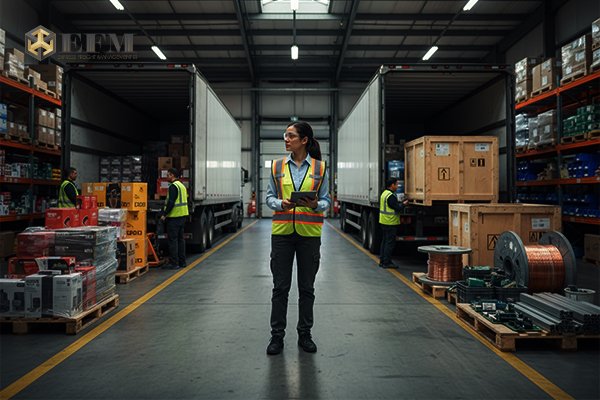
A Container Freight Station, or CFS, operates as a facility near or within a port where workers handle individual pieces of cargo. This is where individual shipments are consolidated into shared containers prior to shipping (a process central to LCL Shipping). Similarly, it is also where the cargo, upon arrival, is removed from shared containers and sorted for delivery to each consignee.
CY
A Container Yard, or CY, serves as a secure area at the port terminal where workers store and move complete containers. Under FCL Shipping, containers arriving or leaving CY are sealed and handled as complete units without opening.
In summary, CY handles the shipping containers, while CFS manages the cargo within.
The Four Delivery Models
Shipping documents and bills of lading show CFS and CY together as a pair. The first term indicates the origin point and the second shows the destination point. This pair marks where the carrier takes responsibility and where it ends.
CY/CY — Full Container, Port to Port
The shipper delivers a sealed full container load (FCL) to the origin CY, such as the Port of Los Angeles or Long Beach. The carrier assumes responsibility from that origin CY and releases it at the destination CY, for example at Port Klang (Malaysia) or Tanjung Priok (Indonesia). The consignee or their agent then collects the sealed container directly from the destination CY.
NOTE: This model applies exclusively to FCL shipments.
CFS/CFS — Consolidated Cargo, Station to Station
The shipper brings LCL cargo to the origin CFS. Workers there combine it with goods from other shippers into one container. The carrier takes responsibility from the origin CFS and completes it at the destination CFS. There, dedicated logistics services coordinate the deconsolidation and distribution to each consignee.
NOTE: When a consolidator or NVOCC handles the move, the master bill of lading reads CY/CY. Meanwhile, the house bill of lading to for individual shippers reads CFS/CFS.
CY/CFS — Full Container Out, Split at Destination
This model serves US exporters sending a single container to several recipients at the same destination. The shipper delivers a sealed FCL container to the origin CY. At the destination, the container is taken to a CFS to be deconsolidated for delivery via local trucking to multiple consignees.
CFS/CY — Consolidated at Origin, Single Consignee at Destination
This model is more commonly used by importers aggregating cargo from various suppliers. The LCL cargo is consolidated at the origin CFS into one container. That container then travels as a full unit for collection by a single consignee at the destination CY.
Cost, Time, and Cargo Risk
Comparing CY/CY and CFS/CFS structures reveals stark differences in transport speed and overall costs.
Time
On transit time, a CY/CY shipment keeps the container sealed from the US origin port until the consignee picks it up at the ASEAN destination. No consolidation wait occurs at origin and no deconsolidation takes place at destination. As a result, full container load moves faster overall.
Further Reading: ATD, ATA, ETD, ETA Meaning Explained
By contrast, CFS/CFS shipments require more handling steps. At the US origin CFS, cargo may wait until enough shipments accumulate to fill a shared container. At destination, deconsolidation finishes before customs clearance proceeds for each consignee. On typical US-to-ASEAN routes, these steps add between two and five days compared to FCL shipments, depending on port and carrier schedules.
Cost
Cost-wise, CY/CY works better when cargo volume fills or comes close to filling a 20-foot or 40-foot container. The shipper pays for the entire container space regardless of unused space.
CFS/CFS lets the shipper pay only for the space their goods occupy, measured in cubic meters or by weight. This approach suits smaller volumes. However, LCL rates per cubic meter tend to be higher than FCL rates per unit. Shippers should also account for additional charges for CFS handling at both ends when calculating total costs.
Risk
Each CFS handling step creates additional contact with the goods. Stuffing and stripping raise chances of physical damage, misplacement, or mixing with other shipments. A sealed CY/CY container avoids these points entirely from origin to destination. The difference matters for fragile, high-value, or hazardous items.
Difference when Shipping to ASEAN
ASEAN Has No Unified Customs Regime
Unlike Europe, ASEAN is not a customs union. Each country, including Malaysia, Indonesia, Thailand, Vietnam, and the Philippines, maintains its own customs authority, tariff schedules, and clearance rules. Consequently, a single consolidated container holding cargo for different buyers across the region requires distinct declarations in each country. No regional clearance mechanism covers multiple ASEAN markets at once. This means every consignment must clear customs individually at its respective destination.
LCL Cargo and Transshipment Through ASEAN Hubs

Many services from US West Coast ports to ASEAN, especially LCL, do not sail direct. Cargo often transships at Singapore PSA or Port Klang before reaching secondary ports such as Ho Chi Minh City, Yangon, or Phnom Penh. Under CFS/CFS, transshipment can require additional consolidation or deconsolidation steps. These lengthen the schedule and add handling. Fortunately, an FCL container under CY/CY transships sealed. This helps preserve transit time and cargo condition.
Port Infrastructure Varies Significantly Across ASEAN
Container terminal efficiency differs widely among Southeast Asian gateways. For example, Singapore PSA offers highly automated, on-dock stations. By contrast, Indonesia’s Tanjung Priok faces recurring traffic bottlenecks. It also relies heavily on off-dock CFS warehouses. At Malaysia’s Port Klang, it uses multiple terminals, each with distinct CFS procedures. The specific terminal affects how LCL freight processes. Because of these differences, exporters must evaluate the infrastructure of the destination port when deciding between full containers and shared loads.
Secondary ASEAN Markets and Multi-Leg Shipments
Markets such as Cambodia, Laos, and Myanmar lack large deep-water terminals. Cargo reaches them through primary hubs, commonly Laem Chabang for Cambodia and Laos or Singapore and Port Klang for Myanmar. For LCL shipments, the multi-leg path increases CFS handling: origin consolidation, hub transshipment steps, and final deconsolidation. Each point extends time and raises handling exposure. Fortunately, FCL shipments can clear customs at the primary hub and travel overland by truck.
Which Model to Use
Cargo volume points to a clear choice in most cases. When goods fill a 20-foot or 40-foot container, CY/CY delivers the better outcome. It moves faster, reduces handling steps, and simplifies clearance at the ASEAN port. For smaller shipments, CFS/CFS with LCL consolidation is more cost-effective. At low volumes, it is hard to justify paying for unused container space in a full container.
For shipments nearing container capacity, exporters must evaluate the cost of unused space against the benefits of faster transit. Time-sensitive, fragile, or hazardous cargo, or shipments to congested ASEAN ports with off-dock CFS facilities, benefit from the CY/CY approach.
For shipments that spread across several ASEAN countries, consider a CY/CFS approach on the main ocean leg. The container travels full to a hub such as Singapore or Port Klang for deconsolidation and onward distribution. This setup can outperform separate LCL bookings. A freight forwarder active on these lanes can review the numbers for a specific move.
Conclusion
With a clear understanding of CFS and CY shipping models, US exporters can select the best option for their cargo bound for ASEAN. To determine the most advantageous path, it is best to consult with an experienced freight forwarder. A qualified partner can analyze your specific needs and manage the complexities of customs, storage, and transport.
For nearly two decades, Express Freight Management has been the trusted partner for businesses shipping between the United States and Southeast Asia. We handle the technological complexity for you, managing everything from carrier selection and customs clearance to warehousing. Discover a streamlined approach to logistics with Express Freight Management for your shipping needs between the United States and Brunei, Cambodia, Indonesia, Laos, Malaysia, Myanmar, Philippines, Singapore, Thailand, and Vietnam today!