

Freight News
Philippines Joins Pax Silica

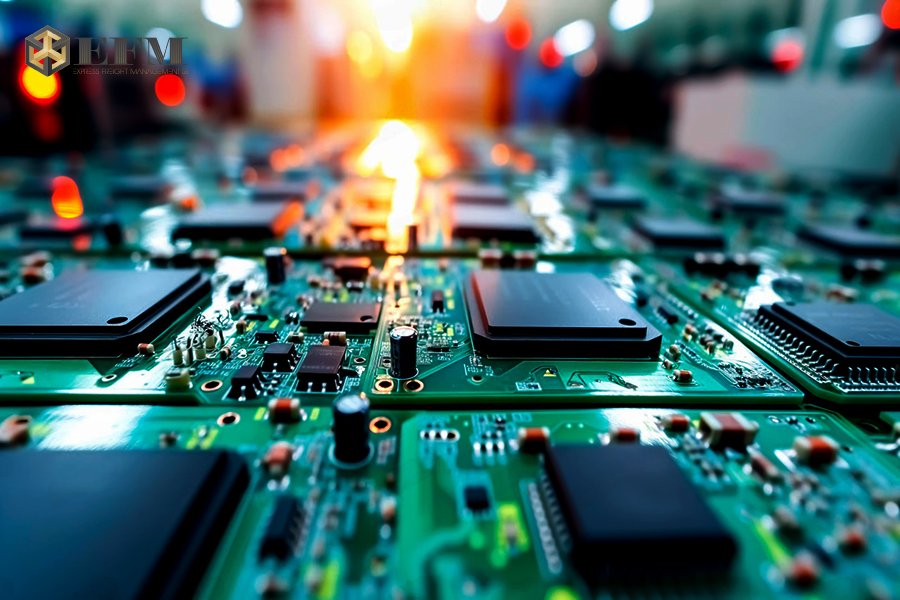
The United States and the Philippines, following the latter’s entry into Pax Silica, have announced plans to build a 4,000-acre industrial hub in New Clark City, Tarlac. This article examines the hub, accompanying infrastructure, and what the development means.
Background
Pax Silica, a US Department of State initiative, launched in December 2025 as a direct response to China’s dominance in rare earth refining. Beijing controls roughly 90% of this process, which converts raw minerals into inputs for chip production. The initiative seeks to secure supply chains for critical minerals, semiconductors, AI infrastructure, and logistics services across allied nations.
Further Reading: US Must Suspend Nvidia AI Chip Exports to China, Senators Say
The Philippines is now the 13th member of the coalition. Other members include Australia, Finland, Greece, India, Israel, Japan, Qatar, Singapore, South Korea, Sweden, the UAE, and the UK. The Philippines brings nickel and copper deposits to the coalition. It also sits along key South China Sea trade routes. Philippine Finance Secretary Frederick Go said the country’s goal is to move up the value chain. This means shifting from lower-value assembly and testing toward advanced packaging, circuit design, and wafer fabrication. Semiconductors are already the Philippines’ top export, making up more than half of total export earnings.
New Clark City Hub
The industrial site will occupy 1,620 hectares in New Clark City, built on former military land in Central Luzon. The US State Department has called it “a purpose-built platform for allied manufacturing.” It is also the first “AI-native investment acceleration hub” in the Pax Silica network.
The hub’s legal structure sets it apart from existing Philippine special economic zones. It is reported to operate under US common law, despite being on Philippine soil. The United States will use the land rent-free for two years, with an option to renew for up to 99 years.
NOTE: The hub has been designated as an Economic Security Zone (ESZ). It is intended to be the first of a planned network of integrated manufacturing sites across allied nations under the Pax Silica framework.
The Luzon Economic Corridor
The Clark City hub sits within the Luzon Economic Corridor (LEC). Launched in April 2024, this is a trilateral infrastructure initiative by the Philippines, the United States, and Japan. The LEC connects four key nodes: Subic Bay, Clark, Manila, and Batangas. Together, these nodes account for over 80% of Philippine port traffic.
The corridor’s main infrastructure project is the Subic-Clark-Manila-Batangas freight railway. This 250-kilometer line will link Subic Port, Clark International Airport, the Port of Manila, and the Port of Batangas. Design is due for completion in 2026, with construction starting in 2027.
Major logistics operators are already expanding within the corridor ahead of that timeline:
- Air Freight (Clark International Airport)
- UPS is building expanded facilities at the Clark Aviation Complex
- FedEx has announced plans to make Clark its newest hub in Asia
- On April 27, 2026, the BCDA awarded the engineering design contract for a second runway at Clark International Airport
- Sea Freight (Subic Bay)
- US firm Cerberus Capital Management invested US$300 million to acquire a shipyard in Subic Bay
The freight railway will not break ground until 2027. Until then, cargo through the Clark hub will move by road (trucking) and air freight.
Logistics and Customs Considerations

As the hub develops, the cargo mix on the US–Philippines lane will change. During the build-out phase, shippers should expect increased inbound movement of industrial machinery, construction equipment, and raw material inputs. Once operations begin, outbound cargo will shift toward processed minerals and higher-value electronics. Each category has its own handling, documentation, and cargo insurance requirements.
Customs Status of the Economic Security Zone
Philippine special economic zones under PEZA operate as separate customs territories. Registered enterprises can import capital equipment and raw materials free from duties and import restrictions. Goods moved from an ecozone into the Philippine customs territory are taxed at the point of transfer.
The Clark City ESZ adds more complexity. Its US common law governance is still being defined. Hence, shippers moving cargo through this zone should engage a customs clearance specialist early. Accurate HS code classification and documentation will help avoid penalties and holds.
Further Reading: The Importance of Accurate Documentation in Customs Clearance
Air Freight at Clark as an Alternative Gateway
For time-sensitive cargo destined for Central Luzon, Clark International Airport is worth considering as an alternative. UPS and FedEx are both expanding there; a second runway is in engineering design, and a $480 million cargo hub investment is underway.
Singapore’s Role
Singapore produces 10% of the world’s chips and 20% of global semiconductor equipment. It also has the largest data center capacity in Southeast Asia. However, it does not function as a manufacturing or minerals base like the Philippines does. Within the coalition, Singapore serves as the regional hub for financial services and logistics.
For shippers already running supply chains through Singapore, the Philippines hub is a complementary addition. The Singapore-to-USA and Philippines-to-USA corridors now sit within the same allied network.
Conclusion
The Philippines’ entry into Pax Silica marks a shift in US-Philippines trade. Infrastructure across the Luzon corridor is moving forward, though the freight railway will not be ready before 2027. The ESZ’s customs framework is also still being finalized.
Shippers on this route should keep track of both the infrastructure timeline and the ESZ’s regulatory developments.
At Express Freight Management, we provide freight forwarding between the United States and the Philippines, Singapore, and across Southeast Asia. Our services cover air freight, sea freight, customs clearance, and warehousing. Contact us for a freight quote today.