

Freight News
Singapore opens 4th US trade office in Austin, Texas

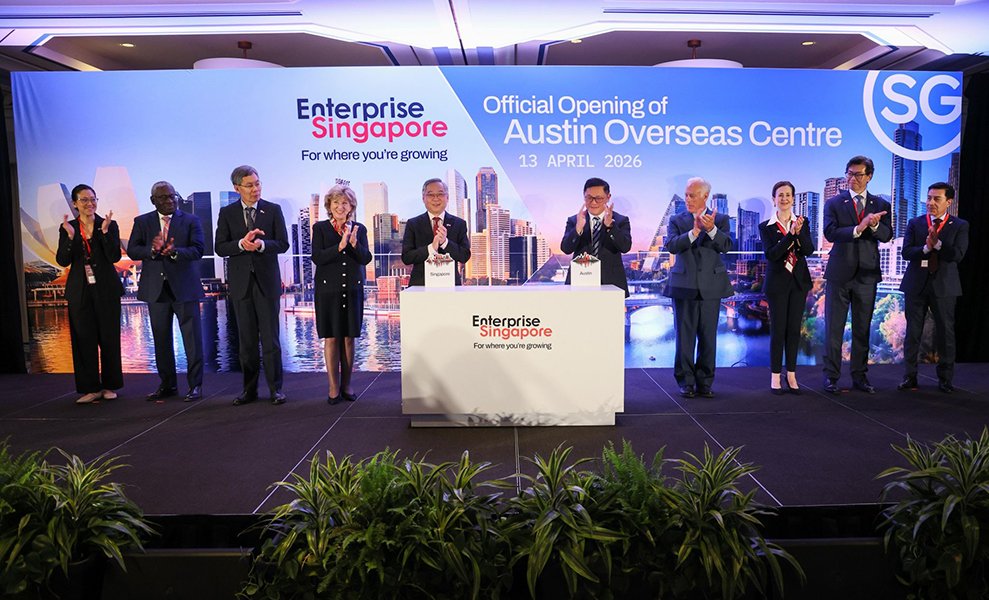
The deepening ties between the United States and ASEAN countries have become a defining feature of the global economic landscape. As the world shifts toward more resilient and self-sufficient supply chains, regions like Southeast Asia play a vital role in helping maintain stability in trade networks. This article will explore the recent launch of Enterprise Singapore’s Austin Overseas Centre, examining its significance for U.S.-ASEAN trade relations.
Further Reading: What Businesses Need to Know About Shipping to ASEAN
Background
Enterprise Singapore officially opened the Austin Overseas Centre on April 13, 2026. This marks their fourth U.S. location, and notably, it is the first of its kind situated outside the coastal cities.
Within the US, Texas stands out as Singapore’s second-largest state-level trading partner. This is largely because of its role in sectors that are central to the future of the global economy, such as energy and advanced manufacturing. In 2025, total bilateral goods trade amounted to nearly US$9 billion.
The state also has one of the largest concentrations of Singapore companies in the US after California and New York. In 2025, Singapore’s foreign direct investment supported over 350,000 jobs across the United States.
Industrial Integration
Singapore companies maintain a strong presence in the United States, with nearly 60 companies based in Texas alone. Several industries benefit from this bilateral relationship, particularly in aerospace and logistics services:
- Aerospace Maintenance (San Antonio)
- Singapore’s ST Engineering operates a commercial aerospace facility in San Antonio, providing aircraft maintenance and engineering services across the U.S..
- Chemical and Hazmat Logistics (Houston)
- Various logistics providers support the movement of hazardous materials and chemicals across and out of the United States. This is commonly done through facilities near key locations such as George Bush Intercontinental Airport and the Port of Houston. These logistics hubs are essential to supporting the U.S.-Singapore trade relationship.
Geoeconomic Policy: Pax Silica and Reshoring
Global macroeconomic trends highlight a distinct supply chain realignment. At the launch of the Austin Overseas Centre, Singapore Deputy Prime Minister Gan Kim Yong noted the worldwide move toward onshoring, reshoring, and more self-sufficient supply chains.
NOTE: The two nations signed the Pax Silica Declaration on December 12, 2025. The United States-led initiative targets the construction of secure supply chains concerning critical minerals, artificial intelligence, and advanced manufacturing. Such steps help producers lower reliance on higher-risk sources. It also helps them direct critical parts through trusted ASEAN partners like Singapore.
Logistics
As U.S.-Singapore trade continues to grow, so do logistical complexities. These include careful movement of dangerous goods, oversized manufacturing equipment, and proper customs steps across the Pacific. With major ports, airports, and rail connections on both sides of the Pacific, the integration of U.S. and ASEAN industrial bases demands highly specialized freight services.
Further Reading: Navigating Customs and Compliance Between the USA and ASEAN Countries
Key challenges include:
- Dangerous Goods and Hazardous Materials
- This refers to the safe and compliant transport of chemicals, hazardous materials, and other dangerous goods like IBC Tanks. Strict regulatory standards are applicable to such cargo. This includes precise documentation and specific handling protocols, among others.
- All shipment has to meet the safety standards of both U.S. and international regulations. For sea freight, one such rulebook is known as the International Maritime Dangerous Goods (IMDG) Code. Managing the movement of these goods requires specialized knowledge and resources to mitigate risk and ensure compliance.
- Further Reading: IMDG Code: 2026 Amendment
- Oversized Equipment
- This refers to the transportation of oversized or out-of-gauge equipment. Such cargo is commonly used in manufacturing and infrastructure projects. Due to their unique nature, there is a need to apply for special permits, routing, and specific handling equipment. In certain cases, trucking or rail transport coordination may be required to avoid delays.
- Further Reading: Breakbulk Shipping
- Customs Compliance and Documentation
- Compliance with customs regulations is a non-negotiable aspect of international trade. Proper customs clearance includes having the right documentation, such as Import/Export Declarations and Certificates of Origin.
- Further Reading: The Importance of Accurate Documentation in Customs Clearance
- Shippers also have to stay up to date on the latest tariff developments. These tariffs apply exclusively to international shipments as government-imposed taxes on imported goods. Almost all countries apply duties, such as the 9% Goods and Services Tax (GST) on most goods entering Singapore. While domestic shipping avoids these duties, international shipping requires declaring item values. Here, proper classification is key. Misclassification increases one’s exposure to customs penalties and shipment holds.
- Compliance with customs regulations is a non-negotiable aspect of international trade. Proper customs clearance includes having the right documentation, such as Import/Export Declarations and Certificates of Origin.
- This refers to the transportation of oversized or out-of-gauge equipment. Such cargo is commonly used in manufacturing and infrastructure projects. Due to their unique nature, there is a need to apply for special permits, routing, and specific handling equipment. In certain cases, trucking or rail transport coordination may be required to avoid delays.
As more companies look to expand in both regions, efficient logistics solutions will be crucial for ensuring that the movement of goods between the U.S. and Singapore remains smooth and compliant.
Conclusion
The opening of Enterprise Singapore’s Austin Overseas Centre is a significant milestone in the U.S.-Singapore trade relationship. It offers a practical base for US exporters to connect with Singapore opportunities while meeting supply chain standards under initiatives such as Pax Silica. As the demand for secure supply chains increases, the role of logistics companies will become even more critical.
At Express Freight Management, we continue to support U.S.-ASEAN trade through efficient, reliable, and compliant logistics solutions tailored to meet the growing demands of the industrial sector. We handle the technological complexity for you, managing everything from carrier selection and customs clearance to warehousing. Discover a streamlined approach to logistics with Express Freight Management for your shipping needs between the United States and Brunei, Cambodia, Indonesia, Laos, Malaysia, Myanmar, Philippines, Singapore, Thailand, and Vietnam today!

