

Freight News
Understanding Air Freight Costs


Air freight is a critical channel for U.S. exporters shipping into ASEAN, particularly for high-value goods such as semiconductors, medical equipment, and time-sensitive components. In 2025, transpacific cargo flows grew as Southeast Asia’s manufacturing sector expanded, with countries like Vietnam, Thailand, and Malaysia increasing imports of U.S. intermediate goods.
However, shipping from the United States into ASEAN is not as straightforward as a single rate per kilogram. Exporters need to navigate several cost layers, each influenced by operational, regulatory, and market factors.
Further Reading: Incoterms
This article breaks down air freight costs into clear and actionable components, helping U.S. exporters understand pricing, verify charges, and optimize shipping decisions into ASEAN markets.
1. Chargeable Weight
Air carriers operate with limited physical space and a strict maximum takeoff weight. Because of this, they do not simply bill you for what the cargo weighs on a scale. They use a concept called “Chargeable Weight.” This value is determined by comparing the actual weight of your shipment against its volumetric weight.
The standard volumetric formula is straightforward. First, calculate volume by multiplying length, width, and height in centimeters. Then divide that number by 6000 to obtain the volumetric weight in kilograms.
NOTE: The divisor of 6000 reflects the industry dim factor, balancing weight against aircraft space.
For example, a shipment measuring 100 × 80 × 60 cm equals 480,000 cm³. Dividing by 6000 gives 80 kg. If the actual weight is 50 kg, the airline charges 80 kg.
For U.S. exporters, this is especially important when shipping bulky but lightweight goods. Adjusting packaging dimensions can directly reduce costs.
2. Primary Rate Components
After determining chargeable weight, the total freight rate is built from several components that vary by route and timing.
The core elements include:
- Base Freight Rate
- This is the linehaul cost per kilogram. U.S.–ASEAN routes often carry premium pricing due to steady export demand.
- Fuel Surcharge (FSC)
- This is adjusted monthly. In June 2025, U.S. jet fuel averaged USD 2.102 per gallon, directly impacting freight pricing.
- Security Surcharge (SSC)
- Covers mandatory export screening and aviation security compliance for outbound cargo.
Fuel remains a major cost driver. Even small increases can significantly affect long-haul shipping costs.
3. Terminal & Handling Fees
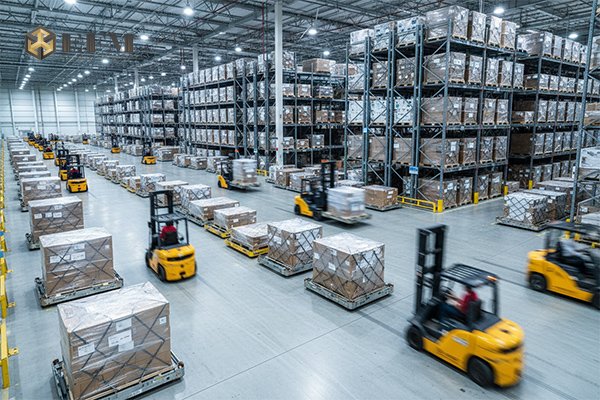
In addition to airline charges, exporters must account for airport-related costs at both origin and destination.
Terminal Handling Charges cover cargo movement, palletization, and loading at U.S. export terminals as well as ASEAN arrival airports. Documentation fees apply when issuing the House Air Waybill and Master Air Waybill. In addition, warehousing storage fees are charged when cargo remains at the terminal beyond the standard free period, which is typically 48 hours.
Further Reading: What Is An Air Waybill?
Delays at major U.S. export hubs can increase these costs, especially during peak periods.
4. Customs & Compliance Costs
Shipping from the United States into ASEAN requires compliance with both U.S. export rules and ASEAN import regulations.
Further Reading: Navigating Customs and Compliance Between the USA and ASEAN Countries
Duties and taxes are calculated based on the Harmonized System code and the declared value of the goods in the destination country. Customs brokerage fees are charged for handling export declarations in the U.S. and import clearance in ASEAN. In some cases, merchandise processing-related fees may also apply depending on documentation requirements.
Errors in classification or documentation can lead to delays, penalties, and additional costs. Accurate paperwork is essential for smooth delivery.
5. Market Fluctuations and Variables
The air freight market is highly sensitive to seasonal shifts and global capacity. Industry data from early 2026 shows that while global demand grew by 5.6%, capacity only increased by 3.6%. This creates a “capacity fatigue” that drives prices upward. Seasonal demand typically peaks between September and December, as well as the weeks leading up to the Lunar New Year.
Directional imbalance also affects pricing. Depending on trade cycles, certain routes from the United States to ASEAN experience higher outbound demand, which increases rates. Capacity constraints also play a role when passenger flights reduce belly-hold space. This tightens availability and can push rates higher on key export lanes.
Further Reading: Air Freight Consolidation
6. Service Additions
Beyond standard shipping costs, exporters often require additional services to improve reliability and control risk.
Common add-ons include:
- Cargo Insurance
- Typically calculated as a percentage of the CIF
- Pick-up and Last-Mile Delivery
- Covers inland transport from U.S. facilities and final delivery within ASEAN.
- Dangerous Goods (DG) Shipping Surcharge
- Applies to regulated shipments requiring special handling and documentation.
Separating these services in quotes helps exporters identify cost-saving opportunities.
Conclusion
Air freight pricing for U.S. exports into ASEAN is shaped by multiple cost layers, from chargeable weight to market-driven surcharges. Understanding these components allows exporters to reduce unnecessary costs and maintain predictable margins. Express Freight Management (EFM) simplifies this complexity by consolidating all cost elements into a transparent structure. Its consultative approach helps exporters optimize packaging, manage fuel volatility, and navigate compliance requirements across ASEAN markets. Through established carrier partnerships, EFM also secures competitive base rates that are often difficult to access independently.
For nearly two decades, Express Freight Management has been the trusted partner for businesses shipping between the United States and Southeast Asia. We handle the technological complexity for you, managing everything from carrier selection and customs clearance to warehousing. Discover a streamlined approach to logistics with Express Freight Management for your shipping needs between the United States and Brunei, Cambodia, Indonesia, Laos, Malaysia, Myanmar, Philippines, Singapore, Thailand, and Vietnam today!